

Will Goldfarb Desserts Informationen
Will Goldfarb ist eine profilierte Persönlichkeit in der Welt der Patisserie, deren Werdegang von New York über Paris, elBulli und Sydney bis nach Bali führt. Seine Arbeit verbindet klassische Techniken mit regionalen Zutaten, Nachhaltigkeit und einer starken Erzählung hinter jedem Gericht.
Biografie und beruflicher Werdegang
Will Goldfarb was born on June 24, 1975, in Port Washington, New York. His early interest in culinary arts was sparked by personal motivations, including fond memories of family meals. After graduating from Duke University with a degree in history, Goldfarb was accepted to law school but deferred to pursue formal culinary training. Following Le Cordon Bleu, Goldfarb sought hands-on apprenticeships across Europe to build practical skills. A pivotal moment came in 1999 when Goldfarb secured a stage at elBulli in Roses, Spain, becoming the first American to work there under Ferran Adrià and his brother Albert. To further broaden his international perspective, Goldfarb traveled to Australia for additional apprenticeships.
Following his training at Le Cordon Bleu in Paris, Goldfarb secured his first professional pastry role at the renowned Gérard Mulot patisserie, where he honed foundational techniques in French pastry-making under the mentorship of the eponymous chef. This position allowed him to build on his apprenticeship networks, emphasizing precision in lamination, tempering, and flavor balancing amid the high-pressure environment of a celebrated boulangerie-pâtisserie. Goldfarb then completed a transformative stage at elBulli in Spain under Ferran Adrià from 1999 to 2000, becoming the first American to apprentice there. Subsequently, Goldfarb ventured to Australia, taking on roles that broadened his perspective on diverse cuisines and ingredient integration.
He began in Adelaide under Chef Chong Liew at the acclaimed Kissa Japanese restaurant, where he contributed to the pastry department while absorbing influences from Asian fusion approaches tailored to local produce. Relocating to Sydney, he joined Tetsuya Wakuda's iconic Tetsuya's as a pastry cook, spending eight months refining his skills in a kitchen renowned for its Japanese-French synthesis, which taught him the art of subtlety and restraint in dessert composition. Goldfarb returned to New York, where he took on professional positions that accelerated his rising recognition in the city's fine-dining landscape.
He first collaborated with event specialist Andy King on high-profile gastronomic installations, applying pastry expertise to theatrical presentations that demanded creativity under tight deadlines. This led to a pivotal role as pastry chef at Papillon under Paul Liebrandt, where Goldfarb developed experimental desserts for multi-course menus, focusing on deconstruction and sensory play to elevate sweets beyond traditional roles. Later, at Cru in Manhattan, he continued pushing boundaries with conceptual creations, such as beach-inspired confections evoking texture and nostalgia, further establishing his reputation for precision and originality among peers.
Lesen Sie auch: Unerwartete Konfliktstrategie: Kekse
Room4Dessert: Von New York nach Ubud
The result of this collaboration was Room 4 Dessert, a 20-seat counter that served a dessert tasting menu. Much to his surprise, the restaurant got a great review in the Times, followed by more praise from the New Yorker. The accolades kept rolling in, and Goldfarb and his crew got used to the attention. “We expected to be in the paper every day,” he says. But something about Goldfarb’s rise to stardom didn’t sit well with his partners. “The guys that I opened with and I had sort of gotten to the point where neither one of us was handling the attention I was getting particularly well,” he says. “So they just decided to close the restaurant.” The closure, in 2007, was arguably the toughest setback of Will’s career.
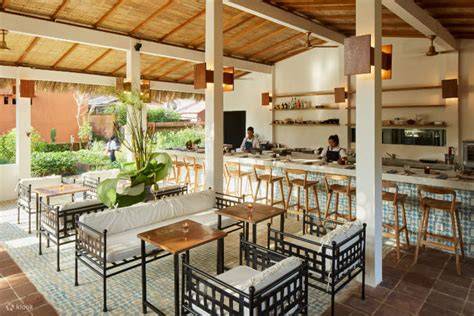
His wife decided that it was time for them to leave the city, so the Goldfarb family decamped to Bali, Indonesia, half the world away from NYC. After a few years of kicking around his new hometown, Goldfarb got the idea to revive his old tasting menu restaurant and settle some “unfinished business.” By 2014, I had the opportunity to relaunch Room4Dessert in Ubud, Bali, and it evolved into a multi-course tasting experience with multiple dining rooms, surrounded by a medicinal plant garden. Our connection to nature grew deeper from that point onward.
Room4Dessert in Bali employs regenerative agriculture through permaculture principles in its on-site gardens, which serve as a living laboratory for enhancing soil health and biodiversity while minimizing environmental impact. The Tanah Teba food forest and Miyawaki Forest initiatives, covering over 4,000 square meters, focus on planting native and exotic fruits such as mangosteen, mango, and cacao, alongside medicinal plants and aromatics, using traditional Balinese methods to restore the local ecosystem.
Nachhaltigkeit, Null-Abfall-Prinzip und Community-Projekte
Central to the restaurant's operations is a comprehensive zero-waste policy managed via the Organic Wealth Center, where hot composting and worm farming transform kitchen scraps and organic residues into nutrient-rich soil for the gardens. Ingredient repurposing is integral, with byproducts like peels and trimmings reused to create ferments, stocks, or further compost, ensuring that nearly all waste is cycled back into the production process. Ethical sourcing is supported through longstanding partnerships with local farmers and producers, such as Big Tree Farms for organic cacao, cashews, and sugars, and traditional artisans like Ketut Kaping for sea salt and Pak Mangku for small-batch palm sugar.
The R4D Academy, launched in 2021, expanded community outreach with workshops on sustainable pastry techniques, zero-waste cooking, and regenerative farming practices tailored to local participants via scholarships. Since 2022, Goldfarb's Room4Dessert has continued to garner recognition in regional and global culinary landscapes, building on his 2021 World's Best Pastry Chef title as a pivotal moment in elevating Bali's dessert scene.
Lesen Sie auch: Schokolade: Sorten und Herstellung
Philosophie: Lokal, site-specific und erzählerisch
Goldfarb's desserts have always been hugely personal, they tell a story - don't all the best desserts? But at his core, he has a desire to please and delight, to make people smile. He wanted to show people that it’s okay to fail. We live in a world that glorifies relentless success and the idea of overnight achievement, but that’s just a myth. Perseverance is underrated, and so is staying humble. Equally important is doing what you love, engaging with people in meaningful ways, and showing up mindfully. The most important lesson is to show up every day, ready to perform. Never give up, stick to what you believe in, and always put others before yourself. Take care of your body and mind, and focus on one thing at a time. Mastery comes from being fully present in each task and remaining committed to the process.
I see the future of pastry heading towards being sugar-free, sustainable, plant-based, and site-specific. We’re moving towards desserts that reflect a deeper respect for the environment and a sense of place while staying connected to tradition in innovative ways.
Die Küche: Lokale Zutaten, exotische Kombinationen
Goldfarb's desserts at Room4Dessert in Bali emphasize the integration of local Balinese and Indonesian ingredients, sourcing approximately 99% of components from regional producers while importing only butter and cream to maintain authenticity in a tropical climate. This approach allows him to adapt Western pastry techniques to the island's humid conditions, where local produce like fresh herbs, spices, and fruits provide natural resilience and flavor depth.
Tropical fruits abundant in Bali play a central role in Goldfarb's innovations, transforming seasonal bounty into sophisticated desserts that highlight their vibrant profiles. Examples include soursop sorbet in The Sugar Refinery, which captures the fruit's creamy tartness in a chilled form suited to the humid environment, and dragonfruit meringue alongside watermelon granita in the Red dessert, where the fruits' mild sweetness contrasts with bolder elements like rosella cream. Other incorporations feature grilled papaya with burnt coconut sauce, mangosteen peel in house-made bitters for a caramel chocolate brûlée using 100% Balinese cacao, and roasted tamarillo for its tangy depth.
Goldfarb fuses Asian spices with Western techniques to create layered flavors, drawing from Bali's aromatic palette to elevate desserts beyond traditional boundaries. Pandan, a fragrant leaf central to Indonesian cuisine, features prominently in the signature Pandanbert-a smoked panna cotta enclosed in woven coconut leaves-where its grassy notes merge with creamy textures for a playful nod to local traditions. Similarly, fresh nutmeg and turmeric appear in spice-forward elements, such as turmeric jamu in the Incidente Stradale dessert, which combines coconut and coffee in a harmonious blend of Balinese herbalism and European patisserie.
Lesen Sie auch: Von Cowboy bis Helene Fischer
Signaturgerichte und Menükonzepte
The nine-course tasting menu created from 99% local ingredients - Goldfarb only imports butter and cream - with fun and thought provoking names like Chocobubbles 4 Evah and 10 Years of Solitude, eaten in the tropics of Bali, with cocktails, is exactly what they need in their lives. There’s also a new book out, Room for Dessert, released through Phaidon, with a foreward by Albert Adrià, which tells Goldfarb’s life story through desserts, and includes 40 recipes for every level of cook, from classics such as brûlée and chocolate chip cookies, alongside his avant-garde creations. Again, Goldfarb hasn’t really had a chance to take stock yet, but describes the book as representative of how he’s thought about desserts for the last 20 years.
Take for example, a dish called The Sugar Refinery, which is based on Goldfarb’s signature Balinese meringue. When he first arrived in Bali he was struck by the fact that for the first time, he was getting the raw ingredients a pastry chef needs, the ingredients he had been using for years in New York - sugar, vanilla, nutmeg, etc. - as fresh as possible.
Another dessert, simply called Red - watermelon ice, dragonfruit meringue, beetroot juice, roasted tamarillo - is “fresh, surprising and beautiful,” while at the more robust-sounding end of a menu split between ‘satisfying,’ ‘iconic’ and ‘new’ dishes, is Day at the Beach, which consists of pancetta financier, pommel and white beer tartare, that Balinese meringue again, and pastry cream soda. Goldfarb says his dishes tend either to be really hard to make and easy to plate, or the other way round, but what about to eat? Do nine sweet courses (the menu is also available à la carte), no matter how divine, plus cocktails, ever prove too much for some people? Death by dessert?
Mediale Aufmerksamkeit und Lehren aus Rückschlägen
Anyone who’s ever tried and failed to get a creative endeavor off the ground might find watching the Will Goldfarb episode of Chef’s Table: Pastry to be an inspiring and/or cathartic experience. The episode begins with the James Beard-nominated dessert virtuoso ruminating on how demanding and frustrating the life of a pastry chef can be. He was warned about this as a young chef, and the prophecy essentially came true. “There’s only so many times you can hear you’re the worst and not at least have it in your mind that maybe everyone’s right,” he remarks. “And that continued for years, so it wasn’t like, a fluke. That theme would keep coming up.”
Goldfarb, a native of Long Island, was a pretty straight-laced student who got involved in the restaurant world after his senior year in college. “I went to Paris to do pastry as an excuse not do start law school right away,” he explains. Goldfarb started working for a chef named Gérard Mulot, who he describes as “the ultimate gentleman,” and that’s when he really fell in love with making pastries.
As he started to plot his next moves, Goldfarb became fascinated with El Bulli, which had just received three Michelin stars and represented “the next generation of cooking” in his eyes. He faxed his resume to Ferran Adrià’s restaurant and got a rejection note. But in the midst of an immigration raid at the Italian restaurant where he was working, Goldfarb decided to call up El Bulli on a lark and ask for a job. Much to his surprise, they invited him to come and work in the kitchen for a year or two. “Getting that invitation made me feel I belonged at the big dance,” he says.
When he got to Spain, Goldfarb started working for Ferran’s brother, Albert Adrià, who he says was “behind a lot of the amazing things that came out of Ell Bulli” at the time. The experience opened his eyes to avant-garde cooking in a fine-dining setting. “When you work somewhere like that you think you’re special; you’re the center of the universe,” he remarks. “Your confidence was high. After that for me, the new minimum standard was to be the best in the world.”
Goldfarb’s El Bulli experience made him a hot commodity when he returned to New York. The chef started working for young gun Paul Liebrandt at a restaurant called Papillon. He started serving elaborate interactive desserts that incorporated blindfolds, syringes full of sweets, and even handcuffs. The chef also says he served onion ice cubes and other things that were “straight-up, indisputably, not delicious.” After too many slow nights at the restaurant, Goldfarb got fired from Papillon. “It was an experimental catastrophe,” he recalls. He next landed at job at Cru, a trendy and well-regarded fine dining restaurant in Manhattan, where he decided to play it straight. “I basically took all of that edgy shit out,” Goldfarb explains. But one day, the owner told Goldfarb that he should indulge his creative side and do whatever he wanted. This lead to high-concept desserts like “Day at the Beach,” a box that included saffron syrup, salt water spray, pastry cream soda with crispy ham, grapefruit gel with beer, and a tiny beach towel. The critics were savage with their takes on Goldfarb’s new desserts. As the chef points out, the New York Post said that hiring him was “the worst decision in New York” that year. To no one’s surprise, Goldfarb was fired after that bad bit of press.
Erweiterungen, Projekte und Auszeichnungen
Goldfarb has expanded his culinary ecosystem with additional projects. In 2023, he launched Powder Room, a venue offering "healthyish" sweets in a restored youth hostel in Ubud. That same year, a Miyawaki forest was established at Room4Dessert to promote biodiversity and sustainable ingredient sourcing. He has enriched his career by creating and promoting a firm of innovative ingredients (Willpowder), as well as developing several collaborations in culinary projects, all of them related to the world of desserts and gastronomy.
In 2018, our journey took on new life after the Netflix show Chef’s Table: Pastry introduced us to a global audience, and in 2021, I was named Best Pastry Chef in the World by 50 Best. We’ve continued to grow and innovate, restoring the Powder Room and Shelter Island with sustainability in mind-no new concrete, focusing on preserving existing structures. At the heart of it all, my journey has always been about following my beliefs-cooking with values that respect people, the community, and nature. It’s about creating desserts that are delicious, beautiful, and meaningful.
Tabelle: Kernaspekte von Goldfarbs Ansatz
| Aspekt | Beschreibung |
|---|---|
| Lokale Zutaten | Rund 99% der Zutaten stammen aus der Region; nur Butter und Sahne werden importiert. |
| Nachhaltigkeit | Permakultur, Miyawaki-Forst, Null-Abfall-Politik, Kompostierung und Wurmfarmen. |
| Kulinarische Wurzeln | Le Cordon Bleu, Gérard Mulot, elBulli, Tetsuya's, Papillon, Cru. |
| Stil | Erzählerische Desserts, fusion von asiatischen Gewürzen und europäischen Techniken. |
| Community | R4D Academy, Workshops, lokale Partnerschaften und Fair-Sourcing. |
Was Besucher erwarten können
The nine-course tasting menu created from 99% local ingredients - Goldfarb only imports butter and cream - with fun and thought provoking names like Chocobubbles 4 Evah and 10 Years of Solitude, eaten in the tropics of Bali, with cocktails, is exactly what they need in their lives. The menu is auch à la carte verfügbar und wechselt saisonal, um Erträge aus den Permakultur-Gärten, seltene Sorten wie frische Kakaofrucht und lokale Spezialitäten abzubilden. Menüs at Room4Dessert evolve seasonally to reflect local harvests, ensuring desserts capture the freshness of Bali's permaculture gardens and rare varieties like fresh cacao fruit for chocolate components.
Goldfarb believes that moving to a new locale helped him recalibrate and focus on his craft, and now he was working with some of the best possible fresh ingredients for pastry making. “That got me out of the cycle of New York bullshit,” he says. The revival of Room 4 Dessert proved to be a big success, one that he couldn’t have achieved on the same level in Manhattan.
tags: #Will #Goldfarb #Desserts #Informationen

