

Halloren Schokoladenfabrik: Dubai-Schokolade, Museum und Hintergrundinformationen
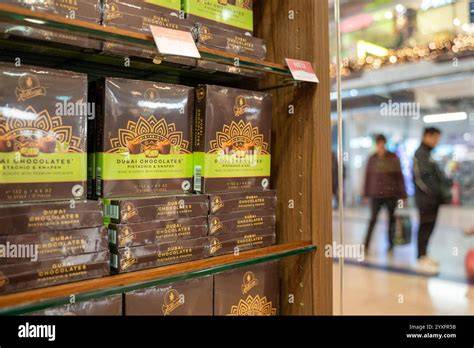
Dubai-Schokolade - von diesem weltweiten Genuss-Trend profitiert jetzt auch die Halloren-Schokoladenfabrik in Halle. Die Produktion luft auf vollen Touren, die Nachfrage ist größer als das Angebot, sagt Matthias Thalheim, der kaufmännische Leiter bei Halloren.
Produktion und Nachfrage der Dubai-Pralinen
Wir produzieren seit 18. November rund um die Uhr bis Weihnachten die Pralinen. Also wir könnten gerade vier, fünf Linien auslasten damit, aber wir haben leider bloß eine. Wir exportieren es auch in die USA, da ist es auch sehr schnell gut angekommen, aber wir sind nicht in der Lage, die ganze Nachfrage zu befriedigen.
In der 2. Dezemberwoche sollen die Dubai-Schokolade-Pralinen aus Halle bei Edeka und netto in den Regalen stehen und 7,99 Euro kosten. Dank Dubai-Pralinen kommt Halloren nun erstmals auf breiter Front bundesweit in den Handel, freut sich der Produktionschef.
Bedeutung für Unternehmen und Branche
Für uns ist es eine Riesenchance und da sind wir auch froh, dass es unsere Mitarbeiter geschafft haben, dass wir das Produkt wirklich massentauglich herstellen können. Ein Heilsbringer für die Branche kann es auch sein, weil wir haben gerade einen explodierenden Kakaopreis, womit die ganze Branche zu kämpfen hat.
Halloren Schokoladenmuseum in Halle (Saale)
In Halle (Saale), the Halloren Schokoladenmuseum documents the history of chocolate and at the same time tells the story of the Halloren chocolate factory. Visitors gain insight into the production, which is located in the same factory complex; the manufacturing process can be observed directly through a panoramic viewing window.
Lesen Sie auch: Testbericht: Halloren Kugeln und Lebkuchen
The museum was founded in 2002; since then the exhibition has been gradually expanded. Additions include a cinema area and the Chocolate Room, which was shown for the first time in 2004. The exhibition space grew to 750 m² in 2007 and today totals 900 m².
Chocolate Room und Schokoladenkunst
The roughly 17 m² Chocolate Room is regarded as a complex work of chocolate art and is unique in Germany. After revisions in 2007 it received a complete redesign in 2017. The implementation was carried out with support from external and in-house chocolate artists; the finished installation consists of around 1.5 tonnes of chocolate and required about 5,000 hours of work.
Thematically the depiction shifts from the founding year 1804 to the years 1896-1900, shortly after the factory in Delitzscher Straße began operations. The workroom of Ernst David is shown; a central element is a life-size chocolate sculpture at the desk. For the figure, desk and chair alone almost 400 kg of chocolate were used. Revised and new objects such as a harpsichord, bookcase, cat on the cushion, dining table, sofa, lit fireplace and rug complete the ensemble.
Weitere Ausstellungsstücke und Sondermodelle
Another exhibit is a city relief that depicts areas of Halle city centre in the year 1952. This date is connected with the origin of the Halloren-Kugeln. The relief was presented in September 2012; its production took place during the summer break of the same year. The base plate is made of milk chocolate, measures about three square metres, shows more than 200 individual parts as floor plans and weighs around 500 kilograms.
Other highlights include the world's largest Hallorenkugel and a detailed chocolate replica of the Alten Rathauses von Halle (Saale) from 2010. For this scale-accurate replica at a ratio of 1:18, about 2,000 hours of work and around one tonne of chocolate were used; the model's display case is kept constantly at 18 °C.
Lesen Sie auch: Halloren Dessert: Einfach & Lecker
)
Zeithorizont und Meilensteine
The museum was founded in 2002; since then the exhibition has been gradually expanded. Additions include a cinema area and the Chocolate Room, which was shown for the first time in 2004. The exhibition space grew to 750 m² in 2007 and today totals 900 m². In September 2012 a large-format chocolate relief was added to the presentation.
Praxisrelevante Informationen für Besucher und Handelspartner
- Besucher gewinnen Einblick in die Produktion, die sich im gleichen Fabrikkomplex befindet; der Herstellungsprozess kann direkt durch eine Panorama-Scheibe beobachtet werden.
- Die Ausstellung umfasst heute rund 900 m² mit wechselnden und fest installierten Exponaten.
- Die erfolgreiche Markteinführung der Dubai-Pralinen führt dazu, dass Halloren erstmals flächendeckend im bundesweiten Handel vertreten ist.
Tabelle: Wichtige Daten in Kürze
| Aspekt | Information |
|---|---|
| Markteinführung Dubai-Pralinen | Produktion seit 18. November rund um die Uhr bis Weihnachten |
| Verkaufspreis | 7,99 Euro (bei Edeka und Netto ab 2. Dezemberwoche) |
| Museum Gründungsjahr | 2002 |
| Ausstellungsfläche | Heute 900 m² (2007: 750 m²) |
| Chocolate Room | Ca. 17 m², ca. 1,5 t Schokolade, ~5000 Arbeitsstunden |
| Großmodelle | Altes Rathaus: ~1 t Schokolade, ~2000 Stunden; Stadtrelief: ~500 kg |
Wir produzieren seit 18. November rund um die Uhr bis Weihnachten die Pralinen. Also wir könnten gerade vier, fünf Linien auslasten damit, aber wir haben leider bloß eine. Wir exportieren es auch in die USA, da ist es auch sehr schnell gut angekommen, aber wir sind nicht in der Lage, die ganze Nachfrage zu befriedigen.
Lesen Sie auch: Tradition und Produktion der Schoko Becher
tags: #Halloren #Schokoladenfabrik #Dubai #Schokolade #Hintergrund #Informationen

